


Complement Component Stimulates Tumor Growth
By LabMedica International staff writers
Posted on 14 Oct 2008
A recent publication described the involvement of the complement protein C5a in tumor development and in a tumor's ability to avoid destruction by the immune system.Posted on 14 Oct 2008
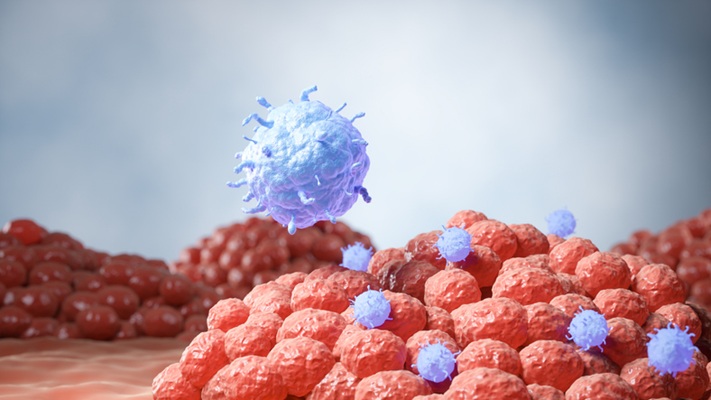
Investigators at the University of Pennsylvania School of Medicine (Philadelphia, USA;) worked with a mouse cancer model to study the role of C5a in tumor development. They reported in the September 28, 2008, online edition of the journal Nature Immunology that activation of the complement system in tumor tissue led to the generation of C5a, which recruited myeloid-derived suppressor cells (MDSC) to the tumor site. These MDSCs blocked the function of CD8+ T cells, which would normally attack the tumor, so that the tumor was left free to develop and spread. Drugs that blocked the C5a receptor considerably impaired tumor growth to a degree similar to the effect produced by the anticancer drug paclitaxel.
"Until now, everyone thought that the complement system was there to eliminate tumor cells. We found that in some conditions, the complement system could promote tumor growth, depending on the specific tumor and the specific environment in which the tumors are developing,” explained senior author Dr. John Lambris, professor of medicine at the University of Pennsylvania School of Medicine. "Researchers are trying to introduce immune therapies and anti-tumor vaccines, but most of these vaccines fail. We show in this study a possible mechanism how to overcome this problem.”
Related Links:
University of Pennsylvania School of Medicine



Platinum Member

Automated Coagulation Analyzer
Hemolumi H6



Automated Clinical Chemistry Analyzer
Envoy 500+
.jpg)
Gold Member

Clinical Chemistry Assay
Sorbitol Dehydrogenase (SDH)