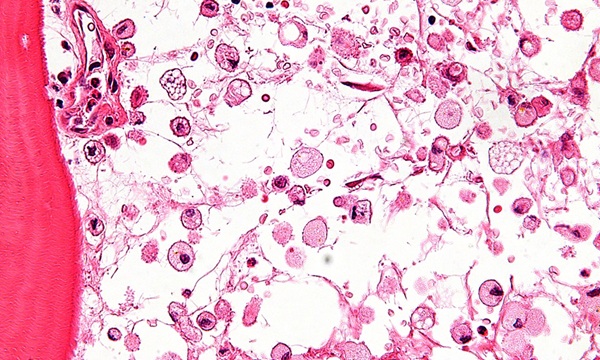
Membrane Protein Enables Tuberculosis Bacteria to Avoid Phagosome Destruction
By LabMedica International staff writers
Posted on 13 Aug 2008
Microbiologists have identified a survival mechanism that allows the tuberculosis bacteria to survive in the phagosomes of macrophages under conditions that destroy most types of bacteria.Posted on 13 Aug 2008
Acidification of the phagosome is considered a major mechanism used by macrophages against bacteria, including Mycobacterium tuberculosis (Mtb). However, Mtb is able to flourish under acidic conditions when grown in the laboratory and is able to survive the acidic environment of the phagosome.
To discover the mechanism used by Mtb to survive under acidic conditions, investigators at Weill Cornell Medical College (New York, NY, USA) used transposon mutagenesis to identify genes responsible for Mtb's acid resistance. They reported in the July 20, 2008, online edition of the journal Nature Medicine that a mutant strain lacking the gene Rv3671c, which codes for a previously uncharacterized membrane-associated protein, was sensitive to acid and failed to maintain intrabacterial pH in acid in vitro and in activated macrophages. Growth of the mutant strain was also severely weakened in mice.
The authors suggest that discovery of drugs targeted against Rv3671c and capable of disrupting Mtb's acid resistance and intrabacterial pH maintenance systems is an urgent priority.
"M. tuberculosis does not depend on Rv3671c under standard growth conditions in the test tube, so it has been overlooked as a candidate drug target,” explained contributing author Dr. Carl F. Nathan, professor of microbiology and immunology at Weill Cornell Medical College. "What is clear is that by targeting an element involved directly in the infective process, we may develop a line of drugs that work in collaboration with, rather than in difference to, the host environment, including host immune responses. Hopefully, this kind of approach can help solve the ongoing problem of bacterial drug resistance.”
Related LInks:
Weill Cornell Medical College




Platinum Member

Automated Coagulation Analyzer
Hemolumi H6
.jpg)
Gold Member

Clinical Chemistry Assay
Sorbitol Dehydrogenase (SDH)
Gold Member

Blood-Based Protein Biomarker Solution for Alzheimer's Disease
BG-DTi2000.
New

Drug Testing Assays
Atellica DT 250 Analyzer