Investigators Locate Major Player in Muscle Regeneration
By Biotechdaily staff writers
Posted on 30 Jul 2008
Posted on 30 Jul 2008
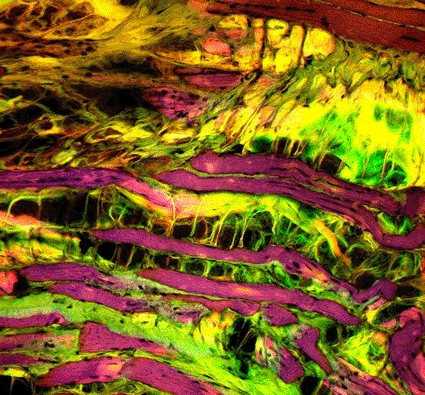
Image: Confocal light micrograph images of a section through muscle tissue affected by muscular dystrophy, a genetic disorder typified by muscle wasting and loss of function (Photo courtesy of Patrick Landmann).
Investigators from the Sbarro Institute for Cancer Research and Molecular Medicine at Temple University (Philadelphia, PA, USA) and the University of Siena (Italy) reported their findings in the early online edition of the September 2008, issue of the Journal of Cellular Physiology. Adult skeletal muscle tissue can regenerate in response to direct injury, neurologic dysfunction, and genetic defects. This healing process begins with an activation of muscle stem cells, known as satellite cells. Once activated, the satellite cells multiply and then differentiate into specific types of muscle fibers that eventually fuse to reconstitute muscle tissue.
The researchers discovered that cdk9-55, a variation of the gene cdk9, is induced specifically when satellite cells begin differentiation and is necessary for the genetic reprogramming required to complete the muscle tissue regeneration process. "By administering cdk9-55 or a protein encoded by a cdk9-55 gene directly to the muscle or on a resorbable material applied to injured or diseased muscle tissue or to an area missing muscle tissue, we can regenerate muscle,” said lead researcher Cristina Giacinti, a researcher at the Sbarro Institute and the department of histology and medical embryology, University of Rome "Sapienza” (Italy).
Researchers also discovered that cdk9-55 can be used to increase muscle tissues in healthy tissue. "This discovery has important implications for tissue regeneration in muscle tissue damaged by disease and injury, genetic disorders such as muscular dystrophy, chronic disorders like cancer or HIV that may impair muscle regeneration, and diseases related to aging,” said Antonio Giordano, M.D., Ph.D., professor of molecular biology at Temple University's College of Science and Technology, and professor of pathologic anatomy and histology of the University of Siena, Italy.
Related Links:
Temple University
University of Siena




Platinum Member

Automated Coagulation Analyzer
Hemolumi H6
Gold Member

Electrolyte Analyzer
CBS-4000 (CBS-400)
New

Slide Scanner System
NanoZoomer S540MD

New
Silver Member

Connectivity Solution
EKF Link