Probe May Help Offer Insights into Cellular Protein Interaction
By Biotechdaily staff writers
Posted on 29 Jul 2008
Investigators have designed a new type of probe that can image thousands of interactions between proteins inside a living cell, giving them a tool to unravel the maze of signaling pathways that regulate most of a cell's activities.Posted on 29 Jul 2008
"We can use this to identify new protein partners or to characterize existing interactions. We can identify what signaling pathway the proteins are involved in and during which phase of the cell cycle the interaction occurs,” said Dr. Alice Ting, an assistant professor of chemistry at the Massachusetts Institute of Technology (MIT; Cambridge, MA, USA) and senior author of a study describing the probe published online June 27, 2008, by the Journal of the American Chemical Society.
The new technique allows researchers to tag proteins with probes that link together similar to pieces of a puzzle if the proteins interact inside a cell. The probes are derived from an enzyme and its peptide substrate. If the probe-linked proteins interact, the enzyme and substrate also interact, and thus detected easily.
To create the probes, the MIT researchers used the enzyme biotin ligase and its target, a 12-amino-acid peptide. Their research is conceptually related to an approach that uses green fluorescent proteins (GFPs), which glow when activated, as probes. Half of each GFP molecule is attached to the proteins of interest, and when the proteins interact, the GFP halves fuse and glow. However, this technique results in many false-positives, because the GFP halves seek each other out and bind even when the proteins they are attached to are not interacting, according to Dr. Ting.
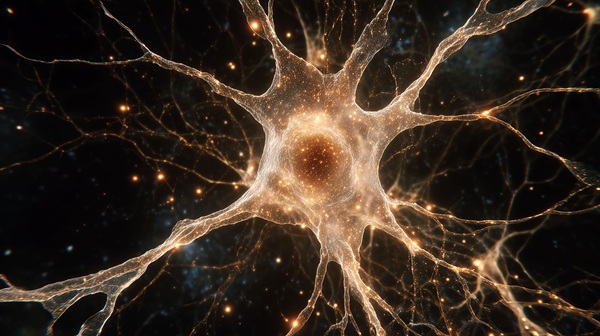
The new probes could be utilized to study nearly any protein-protein interaction, according to Dr. Ting. The evaluated their probes on two signaling proteins involved in suppression of the immune system, and on two proteins that play a role in cell division. They are currently using the probe to image the interaction of proteins involved in synapse growth in live neurons.
Related Links:
Massachusetts Institute of Technology




Platinum Member

Automated Coagulation Analyzer
Hemolumi H6
Gold Member

Electrolyte Analyzer
CBS-4000 (CBS-400)
Gold Member

Fully-auto Specific Protein (Nephelometry) Analyzer
PA240

New
Silver Member

Connectivity Solution
EKF Link