Broccoli Extract Found to Reduce Risk of Bladder Caner
By Biotechdaily staff writers
Posted on 19 Mar 2008
A concentrated extract of freeze-dried broccoli sprouts reduced the development of bladder tumors in an animal model by more than half, according to a report.Posted on 19 Mar 2008
This finding, published in the March 1, 2008, issue of Cancer Research, a journal of the American Association for Cancer Research, reinforces human epidemiologic studies suggesting that eating cruciferous vegetables such as broccoli is associated with reduced risk for bladder cancer. This, according to the study's senior investigator, Yuesheng Zhang, M.D., Ph.D., professor of oncology at Roswell Park Cancer Institute (Buffalo, NY, USA). "Although this is an animal study, it provides potent evidence that eating vegetables is beneficial in bladder cancer prevention,” he said.
There is strong evidence that the protective action of cruciferous vegetables derives at least in part from isothyiocyanates (ITCs), a group of phytochemicals with well-known cancer preventive activities. "The bladder is particularly responsive to this group of natural chemicals,” Dr. Zhang said. "In our experiments, the broccoli sprout ITCs after oral administration were selectively delivered to the bladder tissues through urinary excretion.”
Other cruciferous vegetables with ITCs include mature broccoli, cabbage, kale, collard greens, and various others. Broccoli sprouts have approximately 30 times more ITCs than mature broccoli, and the sprout extract used by the researchers contains approximately 600 times as much.
Although animals that had the most protection against development of bladder cancer were given high doses of the extract, Dr. Zhang reported humans at increased risk for this cancer typically do not need to eat huge amounts of broccoli sprouts to derive protective benefits. "Epidemiologic studies have shown that dietary ITCs and cruciferous vegetable intake are inversely associated with bladder cancer risk in humans. It is possible that ITC doses much lower than those given to the rats in this study may be adequate for bladder cancer prevention,” he said.
Dr. Zhang and his colleagues evaluated the ability of the concentrate to prevent bladder tumors in five groups of rats. The first group acted as a control, while the second group was given only the broccoli extract to test for safety. The remaining three groups were given a chemical, N-butyl-N-(4-hydroxybutyl) nitrosamine (BBN), in drinking water, which induces bladder cancer. Two of these groups were given the broccoli extract in diet, beginning two weeks before the carcinogenic chemical was delivered.
In the control group and the group given only the extract, no tumors developed, and there was no toxicity from the extract in the rats. Approximately 96% of animals given only BBN developed an average of almost two tumors each of varying sizes. By comparison, about 74% of animals given a low dose of the extract developed cancer, and the number of tumors per rat was 1.39. The group given the high dose of extract had even fewer tumors. Approximately 38% of this high-dose group developed cancer, and the average number of tumors per animal was only 0.46, and unlike the other animals, the majority were very small.
Related Links:
Roswell Park Cancer Institute




Platinum Member

Automated Coagulation Analyzer
Hemolumi H6
Gold Member

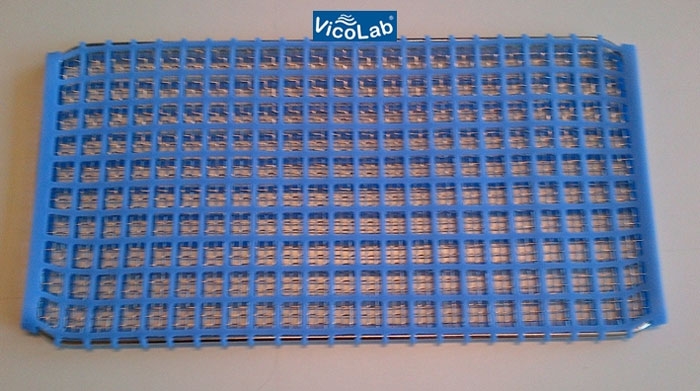
NEW PRODUCT : SILICONE WASHING MACHINE TRAY COVER WITH VICOLAB SILICONE NET VICOLAB®
REGISTRED 682.9
New

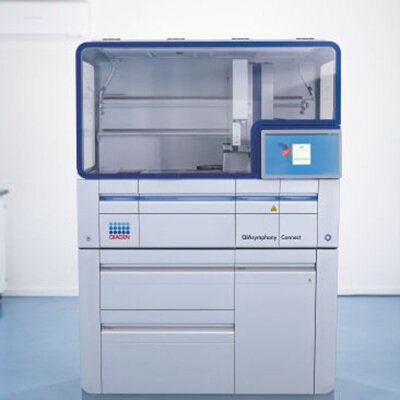
Nucleic Acid Purification Instrument
QIAsymphony Connect
New

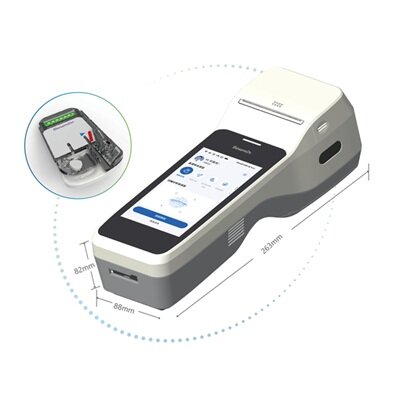
Portable POCT Blood Gas Analyzer
BD100