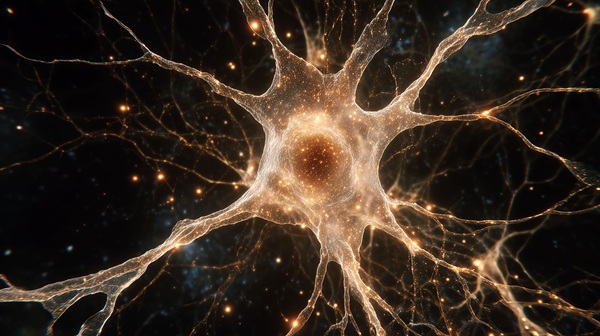
Individual Proteins and their Interactions Simultaneously Visualized
By Biotechdaily staff writers
Posted on 28 Mar 2007
Expression and interaction of fluorescently labeled proteins makes living cells glow in different colors. A novel assay allows simultaneous detection of individual proteins and their interactions in living cells. Posted on 28 Mar 2007
Scientists from the GSF Research Centre for Environment and Health (Neuherberg, Germany) have engineered proteins to constantly emit red or blue fluorescent signals and to produce an additional yellow fluorescent signal upon interaction. Dr. Ruth Brack-Werner, director of the GSF Institute of Molecular Virology (IMV), explained the decisive advantage of the new approach: "In previous assays, signals were generated only by interacting proteins, whereas the individual partners remained undetected. However, the absence of signals could not be used to rule out protein interactions since the absence of one or both interaction partners would have the same effect.” To overcome this problem, Dr. Brack-Werner and her team developed the so-called extended bimolecular fluorescence complementation (exBiFC), which allows simultaneous monitoring of individual proteins.
Dr. Brack-Werner and her colleagues' work focused on mechanisms that control replication of the human immunodeficiency virus (HIV), which causes AIDS. "HIV replication is based on the interaction of cellular proteins with viral proteins. Interactions involving viral regulatory factors have a direct impact on the amount of virus produced by the HIV host cell,” Dr. Brack-Werner said. "Preventing HIV proteins from interacting with their crucial partners is a promising approach to developing novel therapies.”
Therefore, the GSF-scientists developed and validated exBiFC with the HIV Rev protein, which is an accelerator of HIV production. Various assays investigating Rev interactions in artificial settings indicate that the activity of Rev depends on the interaction of Rev molecules with each other and with cellular proteins. The latter include Exportin 1, which transports proteins from the nucleus to the cytoplasm and RISP, a modulator of HIV gene expression discovered by the Brack-Werner team in previous studies.
Dr. Brack-Werner and her team demonstrated that exBIFC allows visualization of interactions of Rev with itself and with Exportin1 and rev-interacting shuttle protein (RISP) in living cells. In addition, they were able to compare the strengths of the interactions of Rev with its partners by analyzing the intensities of the signals in cell images.
ExBiFC has a wide range of potential applications and represents an important tool for the elucidation of protein interaction networks and discovery of novel antiviral factors. Thus, exBIFC has an enormous potential in the battle against leading global health problems such as infectious diseases and cancers.
Related Links:
GSF Research Centre for Environment and Health




Platinum Member

Automated Coagulation Analyzer
Hemolumi H6

Gold Member

Blood-Based Protein Biomarker Solution for Alzheimer's Disease
BG-DTi2000.

Gold Member

Platelet Function Analyzer
PL-12

Electrolyte Analyzer
BKE-B