Nanocrystals Could Offer Carrier-Free Drug Delivery
By Biotechdaily staff writers
Posted on 26 Mar 2007
A novel method of delivering a hydrophobic (water-insoluble) drug, in which the compound effectively acts as its own carrier, has shown comparable efficacy both in vitro and in vivo to the same drug formulated in a conventional delivery vehicle.Posted on 26 Mar 2007
United States researchers from the University of Buffalo (UB; Buffalo, NY, USA) and the Roswell Park Cancer Institute (RPCI; Buffalo, NY,USA) believe the technique, offers significant cost and toxicity advantages over the surfactant or other carrier vehicles commonly used to ensure the stable dispersion of hydrophobic agents into aqueous systems.
The new approach is based on a method known as reprecipitation, whereby a compound is dissolved in a mixable solvent such as dimethyl sulfoxide (DMSO) and injected into water. The molecules then self-assemble as pure nanosized crystals and remain stably dispersed in water.
The UB and RPCI researchers used reprecipitation to synthesize nanocrystals of a photosensitizing anticancer drug, 2-(1-hexyloxyethyl)-2-devinyl pyropheophorbide-a (HPPH), which is currently in Phase I/II clinical trials at RPCI in Buffalo, New York. The researchers found that the nanocrystal formulation was taken up by tumors in vitro and in vivo, showing similar efficacy to the same drug using conventional surfactant-based delivery (1% Tween-80/water).
The UB/RCPI team was originally investigating nanocrystals as a delivery method for hydrophobic dyes in bio-imaging applications, something they continue to pursue. While the use of reprecipitation to form nanocrystals of hydrophobic compounds is well established, as far as the researchers are aware there has been no previous successful attempt to apply this technique in drug delivery, at least in the area of photodynamic therapy.
Many commonly used pharmaceutical compounds are hydrophobic by nature. Delivering them to disease sites calls for special formulations using surfactants or other nanoparticle-based vehicles. The drawback is that these vehicles, or sometimes their by-products, have a tendency to increase the systemic toxicity of the drug formulation.
As nanocrystal formulations are a single-component system, they should not present any safety issues over and above those raised by the original drug, the researchers point out. This should also enable the technique to move into clinical trials very quickly. Moreover, the simplicity of the delivery method, with only DMSO and water required to formulate the nanocrystals, means the potential cost advantage over conventional delivery vehicles is very high.
The UB/RCPI team is now conducting further in vivo studies with HPPH nanocrystals and looking at whether the technique can be used to deliver other hydrophobic drugs. Formation of the nanocrystals and their stability depends on the molecular structure of the drug, so only certain classes of compound will qualify, the researchers note.
Related Links:
University of Buffalo
Roswell Park Cancer Institute




Platinum Member

Automated Coagulation Analyzer
Hemolumi H6
Gold Member

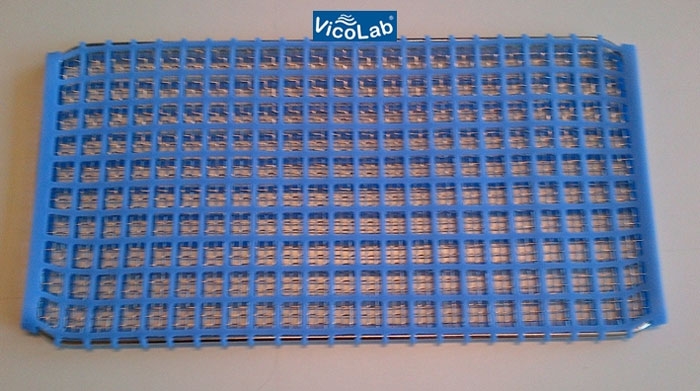
NEW PRODUCT : SILICONE WASHING MACHINE TRAY COVER WITH VICOLAB SILICONE NET VICOLAB®
REGISTRED 682.9

Manual Pipetting Aid
Pipette Controllers macro

New

Fully Automated Urinalysis System
DxU 1800 Fully Automated Urinalysis System