Fetal DNA from Maternal Blood Used for Prenatal Test
By Biotechdaily staff writers
Posted on 13 Feb 2007
Posted on 13 Feb 2007
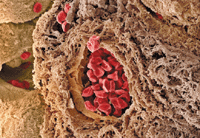
Image
The non-invasive test was described in an online article published in the February 2, 2007, in The Lancet. Currently, available tests for prenatal diagnosis of chromosomal abnormalities--e.g., trisomy 21, which causes Down's syndrome--are limited by several factors. Screening tests, such as ultrasound, are non-invasive, but diagnosis requires further invasive testing. Invasive diagnostic tests, such as amniocentesis and chorionic villus sampling, are associated with risks to the pregnancy.
Ravinder Dhallan, from Ravgen Inc. (Columbia, MD, USA), and colleagues took blood samples from 60 pregnant women and extracted fetal DNA from these samples. The investigators examined the samples of fetal DNA for chromosomal abnormalities by analyzing an array of single nucleotide polymorphisms (SNPs, pronounced "snips”)--tiny variations in the DNA sequence of individuals. The scientists established the ratio of SNPs on different chromosomes, which enabled them to determine whether the fetus had chromosomal abnormalities.
In the current study, 60 blood samples were collected from pregnant patients, with an average age of 34, and the biologic fathers. Ravgen scientists used formaldehyde in addition to processing techniques to analyze a higher percentage of fetal DNA from the maternal blood. DNA was then extracted from white blood cells from both parents and was used to identify genetic variants unique to each parent. It was then possible to distinguish the fetal variants from the maternal DNA in the maternal plasma.
Ravgen scientists identified three trisomy 21 samples and 57 with a normal copy number of chromosomes 13 and 21. By comparing these results to amniocentesis or newborn reports from the clinical sites, Ravgen scientists say that they were correct in two of the three trisomy 21 cases and 56 of the 57 normal cases; one sample was a false-negative and one sample a false-positive.
The authors stated that: "[blood samples] are done routinely in clinical settings and present little risk to the mother and fetus”, and concluded that, "with further refinement, a prenatal diagnostic test based on the methods [that we have developed] could be a useful complement to currently available prenatal tests.”
Related Links:
Ravgen




Platinum Member

Automated Coagulation Analyzer
Hemolumi H6
New
Gold Member

Serum Indices Control
Acusera Serum Indices Control
New

Nucleic Acid Purification Instrument
QIAsymphony Connect
Platinum Member
Integrated Biochemical & Immunological System
Biolumi CX Solution X10+C10