Chili Compound Kills Tumors Safely
By Biotechdaily staff writers
Posted on 26 Jan 2007
UK scientists have demonstrated that capsaicin, the chemical compound that burns the mouth when eating chilies and an active ingredient of over-the-counter drugs, has been found to kill cancer cells with little or no harmful side effects.Posted on 26 Jan 2007
The teams of investigators that conducted the study are from the Universities of Nottingham (UK) and Cardiff (Wales, UK) and were led by Dr. Timothy Bates, who is a member of the UK Medical Research Council (MRC) College of Experts.
The Nottingham study has shown that the family of compounds to which capsaicin belongs, vanilloids, can attack the mitochondria of cancerous cells, causing them to "turn off” and die (apoptosis, or cell death) without harming surrounding tissue. Mitochondria are organelles (miniscule particles of tissue with their own DNA) that live inside the cells and convert nutrients into adenotriphosphate [ATP], the chemical fuel that provides living cells with energy. The study was published online January 2, 2007, in the journal Biochemical and Biophysical Research Communications.
Dr. Bates, who is an international specialist in anti-cancer drug development and mitochondrial research in particular, said this discovery might explain the low incidence of cancer in countries where they eat a lot of chilies, such as Mexico and India.
From a developmental viewpoint, these findings are very promising for two reasons. Firstly, because capsaicin and related compounds already exist in food that is eaten frequently, they are already safe, readily available, and not unknown. Secondly, and possibly more importantly as far as developmental costs and timeframes are concerned, these compounds have already been approved for use in a variety of drugs such as skin ointments to treat psoriasis and neuralgia. Translating their use to treat cancer would be much les expensive and faster quicker compared to starting from the beginning with a new compound.
Dr. Bates and his colleagues evaluated the capsaicin on H460 human lung cancer cells, which is recognized as the "gold standard” for new anti-cancer drugs. However, they also tested similar compounds on pancreatic cancer cells and found the same effect--the tumor cells died off, leaving the neighboring tissue intact. This is a very exciting result because pancreatic cancer has a five-year survival rate of less than 1%, and is currently one of the most intractable cancers to treat.
"As these compounds attack the very heart of the tumor cells, we believe that we have in effect discovered a fundamental ‘Achilles heel' for all cancers. The investigation and development of anti-mitochondrial drugs for cancer chemotherapy by our group is unique in the UK and is likely to be extremely significant in man's fight against cancer both here and internationally,” noted Dr. Bates.
The study that led to this discovery is the first to emerge from a newly formed Nottingham UK-China Collaboration on Complementary and Alternative Medicine (NUKCAM). The collaboration has members from the University of Nottingham and the Chinese National Academy of Sciences (Beijing, China). Prof. De-An Guo, who is head of the Shanghai Research Center for the Modernization of Traditional Chinese Medicine is working with Dr. Bates to try to determine why traditional Chinese medicines are effective in treating cancer and other disorders.
"We have already identified a number of compounds that are currently used in man for other diseases that have [secondary] anti-cancer actions. We are currently seeking industrial partners to enable these agents to be used in clinical trials with colleagues from Nottingham and other centers in the UK to treat a variety of cancers both in adults, and in particular, in children's cancers, where their younger cells are already ‘primed' to die by apoptosis making them more susceptible to these agents. It's also possible that cancer patients or those at risk of developing cancer could be advised to eat a diet which is richer in spicy foods to help treat or prevent the disease,” said Dr. Bates.
Traditional Chinese medicine (TCM) is considered an alternative medicine in the west. However, in China it is an important part of the public health care system. In the last 20 years, there has been an increasing interest on the part of the Western and Chinese medical practitioners to come together and explore this vast amount of knowledge that dates back thousands of years. The main goal of these recent joint projects is to evaluate current hypotheses and uses of TCM using western scientific methods and tools.
Another important milestone will be achieved in this East-West collaboration when the World Health Organization's (WHO) initiative to standardize the terms used in nomenclature in TCM reaches conclusion. It is reported to be in its final phases.
Related Links:
University of Nottingham
University of Cardiff




Platinum Member

Automated Coagulation Analyzer
Hemolumi H6

Gold Member

Nucleic Acid Extractor System
NEOS-96 XT
New
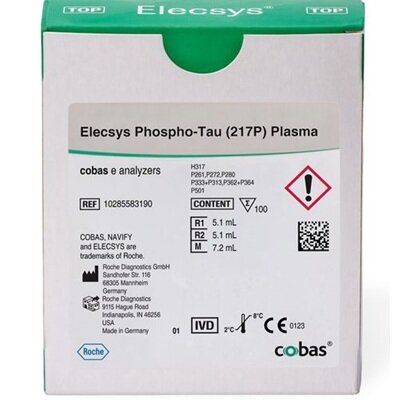
Alzheimer's Disease Biomarker Assay
Elecsys Phospho-Tau (217P) Plasma
LAIR2 Antibody Pair Set
LAIR2 Antibody Pair [Biotin]