Gene Therapy Cures Heart Disorder in Mouse Model
By Biotechdaily staff writers
Posted on 23 Aug 2006
Researchers have identified a subtype of the adeno-associated virus (AAV) that is 200 times more potent in its ability to penetrate cardiac tissue, and have demonstrated its potential for use in gene therapy by successfully treating a mouse model for Pompe disease. Posted on 23 Aug 2006
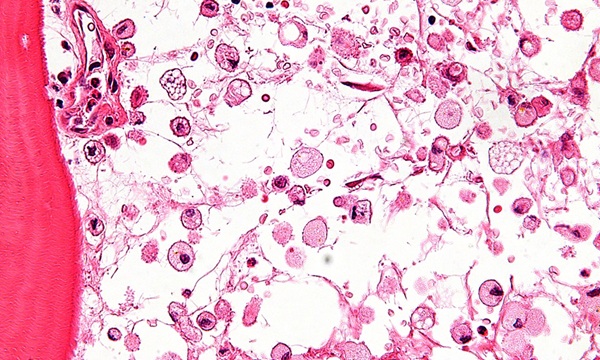
Pompe disease (also called glycogen storage disease type II or acid maltase deficiency) is a rare genetic disorder caused by a deficiency in the enzyme acid alpha-glucosidase (GAA), which is needed to break down glycogen. It is the only glycogen storage disease with a defect in lysosomal metabolism and was the first glycogen storage disease to be identified.
The build-up of glycogen causes progressive muscle weakness throughout the body and affects various body tissues, particularly in the heart, skeletal muscles, liver, and nervous system. Transmission is by autosomal recessive inheritance. Children have a one in four chance of inheriting the disease when both parents carry the abnormal gene. It is estimated to occur in about one in 40,000-300,000 births.
Investigators at the University of Florida (Gainesville, USA) evaluated several different sub-types of AAV as potential vectors for gene therapy of congenital heart diseases. They found that the AAV-9 subtype was taken up throughout the heart muscle at 200 times the levels achieved with the previously used AAV-1 subtype. None of the AAV subtypes tested were found to cause disease or trigger a major immune system reaction.
The AAV-9 vector was loaded with the gene for GGA that is lacking in Pompe disease and then injected into animals in a mouse model for the syndrome. Results published in the July 27, 2006, online edition of Circulation Research revealed that the gene therapy eliminated symptoms of the disease.
"Right now AAV-9 seems to be our best solution for heart problems,” said senior author Dr. Barry J. Byrne, professor of pediatric cardiology at the University of Florida. "This is a way of delivering gene therapy to the heart that is aimed at treating genetic diseases affecting the heart. It is efficient and long lasting. One of the other distinguishing features of our research is that it is probably the first to demonstrate a physiologic correction of a genetic cardiac abnormality.”
Related Links:
University of Florida




Platinum Member

Automated Coagulation Analyzer
Hemolumi H6
Gold Member

Electrolyte Analyzer
CBS-4000 (CBS-400)
Gold Member

Fully-auto Specific Protein (Nephelometry) Analyzer
PA240


HPV Test
Allplex HPV28 Detection