






Compounds May Prevent Brain Cell Death
By Biotechdaily staff writers
Posted on 09 Jan 2006
Spanish researchers have developed synthetic compounds that appear to prevent the death of brain cells.Posted on 09 Jan 2006
The new compounds might one day help to slow or even halt the progression of Alzheimer's disease and other neurologic disorders, according to test tube studies conducted by researchers at the University of Granada (Spain). Their findings were published in the December 29, 2005, issue of the Journal of Medicinal Chemistry.
The compounds, including a synthesized metabolite of the hormone melatonin, all inhibit an enzyme called inducible nitric oxide synthase (iNOS), which is required to produce nitric oxide (NO). NO is a signaling molecule that can activate the immune system. It also plays an important role in the brain, according to the researchers. However, too much NO can trigger the death of brain cells, and some scientists theorize that the compound is involved in the development of Alzheimer's and Parkinson's diseases.
Similar to melatonin, the new compounds appear to be able to cross biologic barriers, suppress iNOS production, and, in turn, prevent NO-induced brain damage. However, the researchers caution that more research is needed to verify their results.




Platinum Member

Automated Coagulation Analyzer
Hemolumi H6

Gold Member

Fully-auto Specific Protein (Nephelometry) Analyzer
PA240


Automated Clinical Chemistry Analyzer
Envoy 500+
New

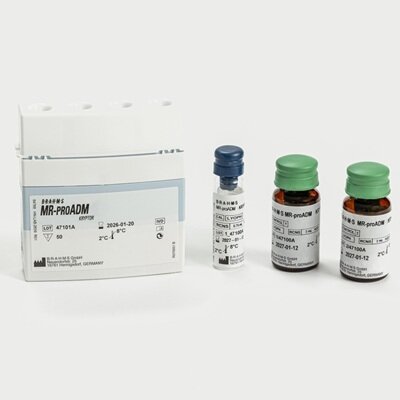
MR-proADM Test
B•R•A•H•M•S MR-proADM KRYPTOR test


