






Cellular Energy Regulation Key to Fighting Cancer
By Biotechdaily staff writers
Posted on 01 Sep 2005
In an attempt to combat disease by modifying energy regulation of cells, a collaborative study has shown that cells lacking a tumor-suppressing kinase called LKB1 can still maintain healthy energy levels when they become stressed. Posted on 01 Sep 2005
This energy management is needed for keeping cells from dying off too soon. The study's findings could lead to new advances for fighting cancer, in addition to potential treatments for type 2 diabetes and obesity.
The study, published in the August 12, 2005, issue of the Journal of Biological Chemistry, was led by Dr. Lee Witters, from Dartmouth University Medical School (DMS, Hanover, NH, USA). Kinases include a large family of enzyme proteins that play major roles in the functioning of most cells in living organisms. Dr. Witters has focused much of his research on the AMP-activated kinase (AMPK), which is responsible for regulating energy within cellular pathways.
"A cell's energy level is critical to its survival,” explained Dr. Witters, who compared a low-energy cell to a car with an empty tank. "In a previous study, we found that the cellular ‘gas gauge,' AMPK, can turn around and alter any deficits in the cell if it is turned on by the kinase LKB1. In this study, we wanted to see if AMPK could also be turned on by something besides LKB1.”
"We decided to work with cervical and lung cancer cells because LKB1 is absent from the cellular pathway,” said Rebecca Hurley, lead author of the study and a graduate student in the molecular and cellular biology program at Dartmouth. Working closely with scientists at St. Vincent's Institute (Victoria, Australia) and Duke University (Durham, NC, USA), the DMS team concluded that two kinases in these cancer cells, CaMKKa and CaMKKß, are able to regulate AMPK independent of LBK1.
"With the addition of these two kinases, we think we have all nearly the players responsible for energy regulation within the cell, which should offer new opportunities in cancer treatment,” added Ms. Hurley. "If we can stifle a cancer cell's ability to adapt to an energy deficit, it might lose its growth advantage.”
"You need to know how all these proteins interact before you can make truly significant advances,” noted Dr. Witters "It's like poker; not only do you need to know what each card signifies individually, but you must have an understanding of how they play off each other in order to win.”
In addition to cancer-fighting potential of AMPK regulation, the enzyme also reacts to alterations in glucose or insulin and mediates faulty energy metabolism, a characteristic of type 2 diabetes. "This indicates that AMPK is a very tempting target for the treatment of some forms of diabetes and even obesity,” stated Dr. Witters.
As these investigators continue to narrow in on the key role of kinases in the treatment of disease, they recognize that this study is becoming more complicated and multiple approaches are needed to find solutions. Dr. Witters believes that major breakthroughs in science can only be achieved through open collaboration, citing partnerships between faculty and students, and between other institutes in the scientific and medical communities.




Platinum Member

Automated Coagulation Analyzer
Hemolumi H6
New
Gold Member

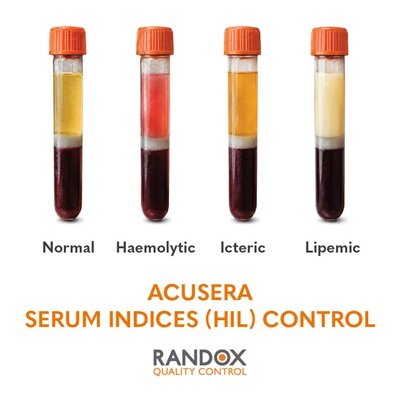
Serum Indices Control
Acusera Serum Indices Control

Platinum Member
Integrated Biochemical & Immunological System
Biolumi CX Solution X10+C10


Automated Clinical Chemistry Analyzer
Envoy 500+


