


Trigger Found for Inflammatory Response
By Biotechdaily staff writers
Posted on 05 Jul 2005
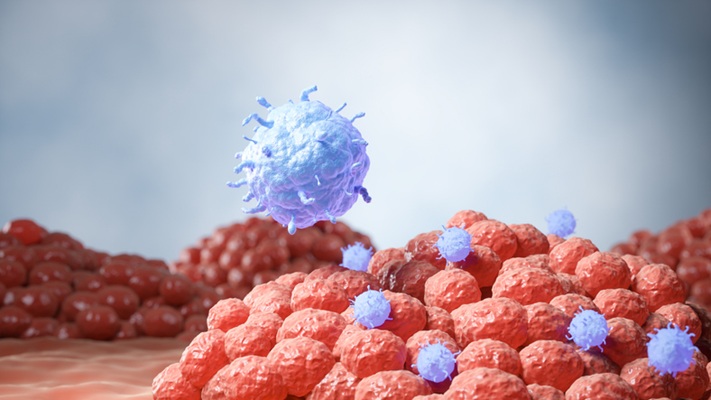
Researchers have found that the proteolytic enzyme cathepsin G, which is produced by the neutrophil class of immune cells, plays a critical role in the onset of inflammatory diseases such as arthritis.Posted on 05 Jul 2005
Investigators at the Washington University School of Medicine (St. Louis, MO, USA) created a model for arthritis by injecting laboratory mice with collagen from calf joints. They found that mice lacking cathepsin G did not develop an inflammatory response because the animals' neutrophils failed to initiate cytoskeletal reorganization and cell spreading. Addition of proteolytically active cathepsin G restored the neutrophils' ability to trigger inflammation, while inactive cathepsin G was unable to do so. These findings were published in the June 2005 issue of Immunity.
"The mice make antibodies to that protein because it is somewhat foreign, but the antibodies have enough cross-reactivity that they will bind to the mouse's own cartilage and collagen and initiate an inflammation,” explained senior author Dr. Christine Pham, assistant professor of medicine at Washington University. "This leads to a condition similar to rheumatoid arthritis in the mice. Cathepsin G affects a very early step in this kind of immune response, so inhibiting it has attractive potential for developers of therapeutics.”
Related Links:
Washington University School of Medicine



Platinum Member

Automated Coagulation Analyzer
Hemolumi H6

Platinum Member
Integrated Biochemical & Immunological System
Biolumi CX Solution X10+C10

Gold Member

Electrolyte Analyzer
CBS-4000 (CBS-400)