






Spectroscopy Aids Drug-Delivery Research
By Biotechdaily staff writers
Posted on 29 Mar 2005
Researchers are investigating transdermal drug delivery by using a new spectroscopy instrument that provides spatial distribution of various substances, allows skin-penetration pathways to be studied, and can measure protein as well as mineral content of bones.Posted on 29 Mar 2005
The instrument, called Spectrum Spotlight 300 FT-IR (Fourier transform-infrared), is able to map the spatial distribution of penetration enhancers, pharmaceutical candidates, and other substances in various layers of the skin. This is important in cases where the best therapeutic intervention requires delivery at particular concentrations to well-defined locations within the skin.
The Spectrum Spotlight FT-IR offers an array of detectors that acquire spatially resolved spectra very quickly in order to generate an infrared image of the sample, providing IR images in minutes rather than hours or days as was previously necessary. The instrument is the product of PerkinElmer Life and Analytical Sciences (Shelton, CT, USA).
The researchers, from Rutgers University (Newark, NJ, USA), have focused on liposomes for topical, dermal delivery of biologically active molecules. They have successfully used these for the delivery of low- and high-molecular weight molecules into the skin. As an alternative to a virus-mediated delivery system, they have opened the field of dermal gene delivery.
"An advantage of the imaging IR approach is that in addition to mapping of external substances introduced to the skin, the spatial relationships between these external substances and internal skin components may be monitored and correlated,” observed Richard Mendelsohn, professor of chemistry at Rutgers.
Related Links:
Rutgers
PerkinElmer




Platinum Member

Automated Coagulation Analyzer
Hemolumi H6
New
Gold Member

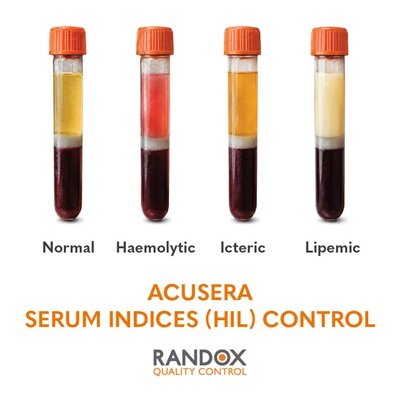
Serum Indices Control
Acusera Serum Indices Control
Gold Member
Pre- Eclampsia Control
Acusera Pre-Eclampsia Control
New

Microbiology Laboratory Automation Solution
BD Kiestra™ ReadA+BarcodA


