






Interferon Treats Colonic Inflammation
By Biotechdaily staff writers
Posted on 17 Mar 2005
Researchers studying inflammatory bowel disease (ulcerative colitis and Crohn's disease) have found that alpha and beta interferon suppressed the effects of the syndrome in a mouse model by inhibiting the inflammatory activity of immune system macrophages.Posted on 17 Mar 2005
Investigators at the University of California, San Diego (USA; www.ucsd.edu) worked with two similar but genetically distinct mouse strains, RAG1 and SCID. Mice of each strain were treated with drugs to activate Toll-like receptor 9 (TLR9).
Toll-like receptors (TLRs) are primary transmembrane proteins of immune cells that serve as a key part of the innate immune system; in addition they show a link between the innate and adaptive immune systems in vertebrates. They are a group of pattern recognition receptors (PRRs) that bind to pathogen-associated molecular patterns (PAMPs). They were first discovered in the fruit fly but have close homologues in mammalian immune cells. Their function is the recognition of pathogens and the activation of immune cell responses directed against those pathogens.
The current study, which was published in the March 2005 issue of the Journal of Clinical Investigation, showed that activation of TLR9 suppressed experimentally derived colitis in the RAG1 mice but not in SCID mice. Colitis suppression was shown to be due to activation of interferon alpha and beta in the RAG1 mice. A mutation that impaired interferon signaling in the SCID mice prevented expression of the beneficial effects of TLR9 activation in these animals.
Treating the RAG1 mice with antibodies to neutralize interferon reversed the anti-inflammatory effect of TRL9, while treatment of the SCID mice with recombinant interferon induced suppression of bowel disease in these animals.
"Although alpha/beta interferon therapy has been tried in recent clinical trials, along with other anti-inflammatory treatments, researchers have not understood how or why alpha/beta interferon might work as an inflammatory bowel disease treatment,” said senior author Dr. Eyal Raz, professor of medicine at the University of California, San Diego. "Our study describes how activated alpha/beta interferon plays a protective role in colonic inflammation.”
Related Links:
University of California, San Diego




Platinum Member

Automated Coagulation Analyzer
Hemolumi H6
Gold Member

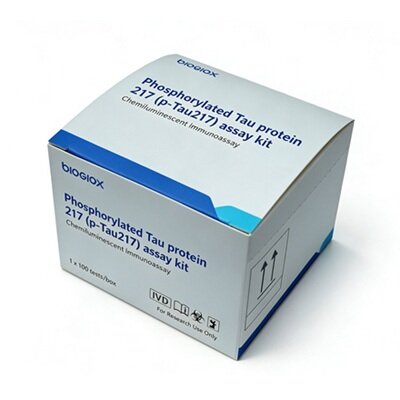
Blood-Based Protein Biomarker Solution for Alzheimer's Disease
BG-DTi2000.

LAIR2 Antibody Pair Set
LAIR2 Antibody Pair [Biotin]

Manual Pipetting Aid
Pipette Controllers macro


