Protective Role of Omega-3 Confirmed in Alzheimer's
By Biotechdaily staff writers
Posted on 22 Sep 2004
Researchers studying the molecular basis for Alzheimer's disease have found in a mouse model that mimics the disease in humans that lack of omega-3 polyunsaturated fatty acids in the diet promoted damage to neural dendrites and aggravated deficiencies in memory and learning.Posted on 22 Sep 2004
Previous epidemiologic studies on human populations have shown that dietary supplements containing omega-3 polyunsaturated fatty acids might protect against Alzheimer's disease. To investigate this possibility at the molecular level, investigators at the University of California, Los Angeles (USA), worked with a line of mice that had been genetically engineered to express the gene for amyloid precursor protein (APP), the plaque-forming protein found in the brains of victims of Alzheimer's disease.
Results published in the September 2, 2004, issue of Neuron revealed that when the omega-3 polyunsaturated fatty acid docosahexaenoic acid (DHA) was eliminated from the diet, the level of DHA in the brains of the transgenic animals was decreased compared to normal mice. Examination of brain tissue under the microscope showed a comparative increase in damage to the dendrites of the experimental animals. In behavioral studies the transgenic mice on low-DHA diets showed "profound performance deficits” in learning and remembering the location of hidden, submerged platforms in a tank called the Morris water maze. None of these negative effects were seen when the mice were maintained on a diet supplemented with DHA.
The authors concluded that their findings "suggest that patients bearing a genetic risk of Alzheimer's disease may be more vulnerable to a lack of essential fatty acids, and support the idea that increased DHA intake should be considered as a potential neuroprotective strategy for Alzheimer's disease.”
Related Links:
University of California, Los Angeles




Platinum Member

Automated Coagulation Analyzer
Hemolumi H6

Gold Member

Flocked Fiber Swabs
Puritan® Patented HydraFlock®

CMV CLIA Diagnostic
CLIA CMV IgA Screen Group
New

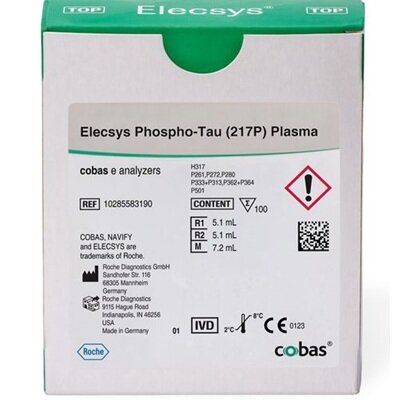
Alzheimer's Disease Biomarker Assay
Elecsys Phospho-Tau (217P) Plasma