Cultured Sperm Used to Create Transgenic Animals
By Biotechdaily staff writers
Posted on 02 Feb 2004
Using sperm genetically modified and grown in a laboratory dish, a Japanese and U.S. team has created transgenic animals. Its work was reported in the January 26, 2004, online issue of the Proceedings of the [U.S.] National Academy of Sciences.Posted on 02 Feb 2004
The team developed a system that enables immature sperm cells taken from male zebrafish to survive long enough in vitro that they can receive foreign genes inserted by a retrovirus. These cells go on to develop into genetically modified, mature, functional sperm. They are then used to fertilize zebrafish eggs in a laboratory dish, resulting in the production of transgenic embryos and, ultimately, transgenic zebrafish. Transgenic zebrafish created in this way carry the inserted, foreign gene in every cell of their bodies, including their germ cells. This means they will transmit the foreign gene along to their offspring.
The sperm culturing system will allow researchers to further explore the basic biology of sperm production in vertebrates. It will also allow them to do so economically, since the transgenic fish are not mosaic, so screening for transgenics is reduced and an entire generation of breeding can be skipped. This saves significant time and money, say the researchers. The new techniques have the potential to speed the production of many different types of transgenic animal models that will provide new insights into human development and disease. The findings may also be useful to researchers exploring pre-fertilization strategies for human gene therapy.
"To our knowledge, this is the first time that sperm cells have been cultured entirely in vitro and used to produce a transgenic animal. It was a unique challenge that required creative solutions,” said coauthor Shawn Burgess, Ph.D., an investigator in the Genome Technology Branch of the U.S. National Human Genome Research Institute (HGRI; Bethesda, MD, USA), who worked with researchers from the Fukui Prefectural University (Obama, Japan).
Related Links:
Fukui Prefectural University
National Human Genome Research Institute




Platinum Member

Automated Coagulation Analyzer
Hemolumi H6

New
Gold Member

Serum Indices Control
Acusera Serum Indices Control

New

Gastrointestinal Panel
Xpert® GI Panel
Gold Member

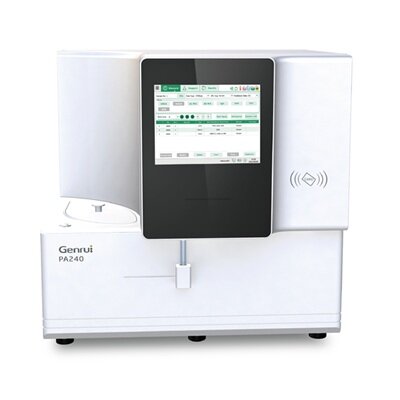
Fully-auto Specific Protein (Nephelometry) Analyzer
PA240