Bacterial Vesicle Expression System Streamlines Production of Cancer Diagnostic Proteins
Posted on 31 Aug 2026
Recombinant proteins are central to many cancer diagnostics and therapies, but numerous targets remain difficult and costly to produce because they are unstable, toxic to microbial hosts, or require precise folding. These manufacturing barriers can limit assay development and restrict access to advanced testing. Reducing the cost and complexity of protein expression is therefore a priority for translational laboratories. New findings now demonstrate a vesicle-based bacterial expression approach, supported by a newly launched enterprise aimed at advancing the technology for biomedical applications.
At the University of Kent, Vesicle Nucleating Peptide (VNp) technology has become the basis of Sirius Proteins, a start-up registered this month to commercialize a simpler method for producing proteins used in cancer treatments, vaccines, and diagnostic tests. The platform was developed and patented at Kent, and the company’s launch is intended to move the technology closer to broader commercial adoption.
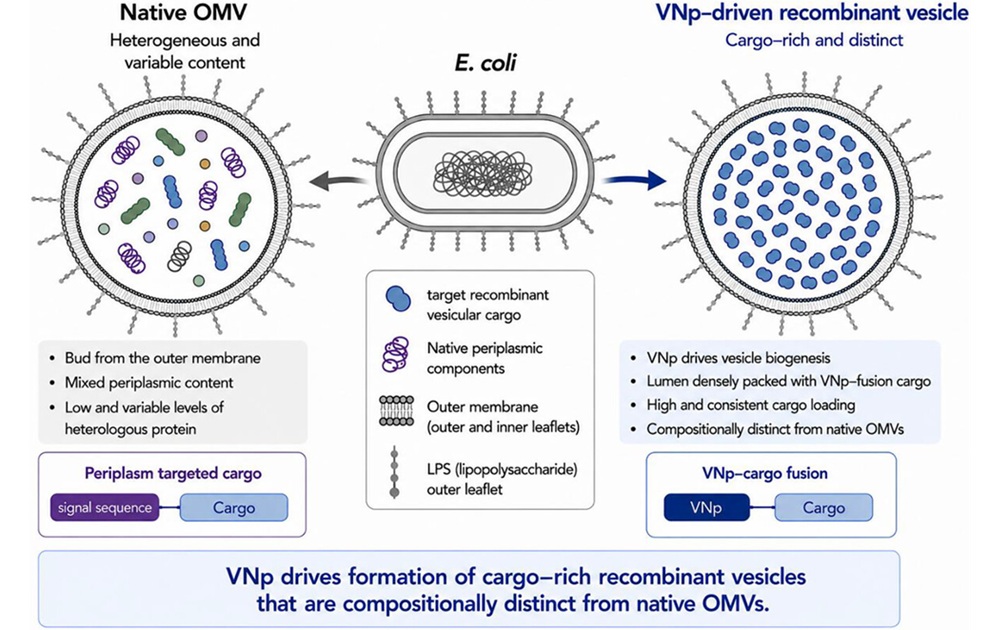
VNp works by directing bacterial cells to package recombinant proteins into tiny membrane-bound vesicles and export them outside the cell. By shifting protein accumulation into secreted vesicles, the approach increases overall yield while simplifying recovery. The mechanism is designed to support production of proteins that are unstable, toxic to producer cells, or dependent on specific folding for activity.
Kent scientists, working with the Lasers for Science (LFS) Central Laser Facility operated by the Science and Technology Facilities Council, evaluated the vesicle platform using advanced imaging at the OCTOPUS Lasers for Science Facility in Harwell, Oxfordshire. The team compared naturally occurring vesicles with vesicles generated by VNp-engineered bacteria.
Findings published August 14, 2026, in the Journal of Extracellular Vesicles showed that engineered vesicles could be controlled in ways that support applications such as protein engineering, targeted drug delivery, and future therapeutic development. The work also indicated control over vesicle composition and functionality.
The initiative is positioned to reduce barriers for laboratories and companies that rely on recombinant proteins for drug discovery, biologics, and diagnostic assay development. As described by the partners, simplifying vesicle-mediated expression and purification could broaden access to difficult targets and streamline production workflows. Sirius Proteins was registered in August 2026 to advance commercialization of the Kent-originated platform.
“This is an excellent example of how the advanced microscopy available at a national facility can support fundamental research while also helping a new spinout company develop its products. We’re playing a significant role in taking extracellular vesicles from biological discovery through bioengineering and toward industrial protein production and clinical applications. It has been a really enjoyable project to work on, and I look forward to continuing to support the team and Sirius Proteins as they grow,” said Professor Stanley Botchway of the LFS Central Laser Facility.
Related Links
University of Kent