Aptamer Biosensor Technology to Transform Virus Detection
Posted on 20 Jan 2026
Rapid and reliable virus detection is essential for controlling outbreaks, from seasonal influenza to global pandemics such as COVID-19. Conventional diagnostic methods, including cell culture, antigen testing, and PCR, are effective but often slow, costly, or dependent on specialized infrastructure and trained personnel. These limitations can delay diagnosis and surveillance, particularly in low-resource or high-demand settings. Now, a new review highlights how a different class of diagnostic tools could overcome many of these barriers by enabling faster, cheaper, and more portable virus testing.
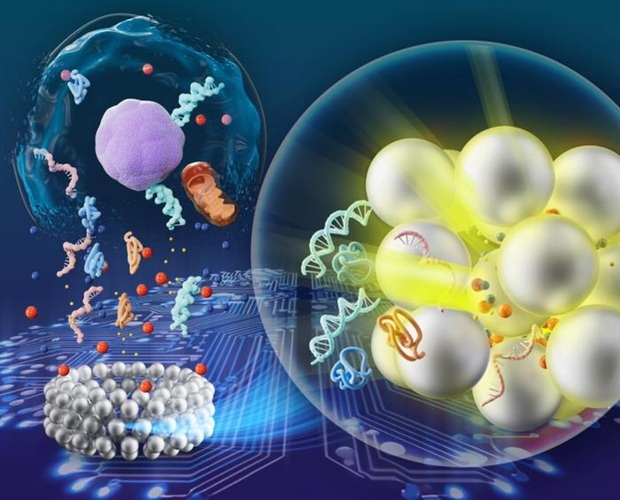
The review by researchers at Dalian University of Technology (Liaoning, China) focused on aptamer-based biosensors, which use short strands of DNA or RNA—known as aptamers—that can bind viruses with high specificity. Unlike antibodies, aptamers are fully synthetic, easier to manufacture, more stable under harsh conditions, and simpler to modify for different sensing platforms.
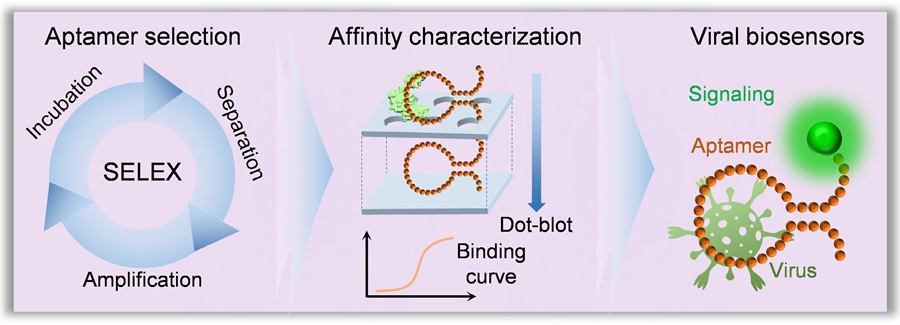
Aptamers are generated using a laboratory selection process called SELEX, which identifies sequences that bind tightly to viral proteins or whole virus particles. Recent advances in SELEX techniques have improved selection speed, binding performance, and adaptability, allowing aptamers to keep pace with rapidly mutating viruses. Once selected, aptamers can be integrated into multiple biosensor formats that convert viral binding into measurable signals.
The review describes how aptamers are now being incorporated into electrochemical sensors, fluorescent and colorimetric assays, and advanced optical platforms such as surface plasmon resonance and surface-enhanced Raman scattering. These biosensors have demonstrated high sensitivity and specificity in laboratory studies and can often deliver results within minutes.
In addition to clinical diagnostics, the review published in Biocontaminant highlights applications in environmental monitoring, food safety testing, and early warning systems capable of detecting viruses in water, air, or on surfaces. The authors note that further work is needed in large-scale validation, standardization, and integration into real-world workflows. Combining aptamer biosensors with microfluidics, nanomaterials, and data analysis tools could further enhance reliability and accelerate deployment.
“Reliable viral detection underpins nearly every public health response, from patient diagnosis to outbreak surveillance,” said corresponding author Jiuxing Li. “Our review shows that aptamer-based biosensors are rapidly closing the gap between laboratory accuracy and real-world usability.”