AI Tool Predicts Treatment Success in Rectal Cancer Patients
Posted on 01 Dec 2025
Artificial intelligence (AI) may soon help clinicians identify which rectal cancer patients are likely to respond well to treatment, using only the routine biopsy slides already obtained at diagnosis.
Researchers at University College London (UCL, London, UK) trained an AI model to detect and quantify key immune cells in the tumor microenvironment—information that typically requires specialized, expensive techniques such as whole-genome sequencing or spatial transcriptomics. The team showed that the AI tool can analyze the tumor’s immune landscape directly from routine images and link it to treatment outcomes.

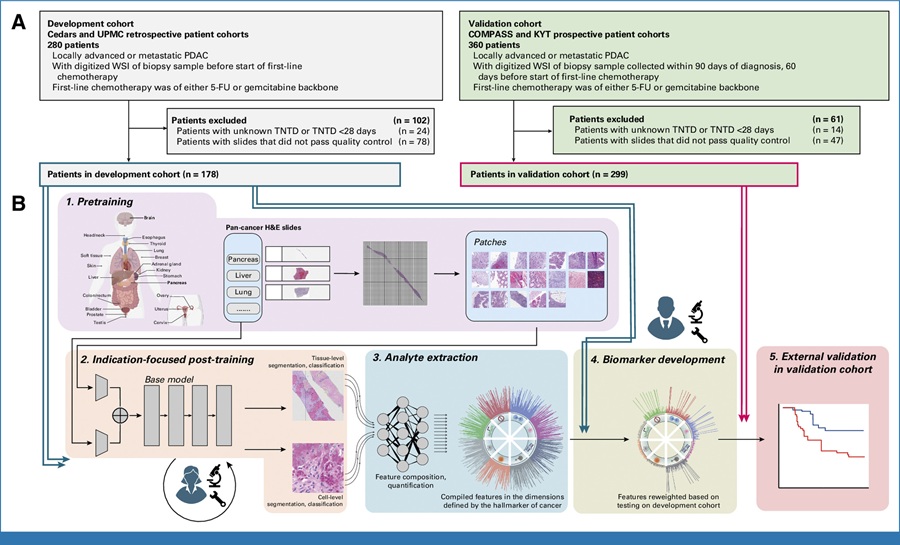
By analyzing millions of pathology images, then testing the system on 900 patient samples, including those from the ARISTOTLE trial, the researchers demonstrated that the AI could rapidly identify immune ‘signatures’ associated with survival and recurrence. The findings, published in eBioMedicine, show that patients with higher numbers of lymphocytes in and around their tumors tended to live longer and had lower recurrence risk, while higher macrophage levels were linked to poorer outcomes.
The system also captured how immune profiles change before and after chemoradiotherapy. Patients whose tumors showed an increase in tumor-infiltrating lymphocytes after treatment had better outcomes, whereas those whose tumors remained immunologically inactive were more likely to relapse. When these immune trends were analyzed alongside tumor genetics, the combined data offered deeper insight. For instance, KRAS-normal patients with high lymphocyte levels had particularly favorable prognoses, while elevated macrophages were especially detrimental in tumors with TP53 mutations.
The researchers also observed that tumors with high mitotic activity—a sign of rapid cell division—tended to suppress the immune system and were linked to worse survival. To make these findings accessible to clinicians, the team has built Octopath, a free online tool that provides automated immune analysis from digital slides.
The team notes that larger, more diverse studies are required before the technology can be integrated into standard care. The goal is to use immune and genetic markers derived from routine biopsies to personalize rectal cancer treatment, tailoring therapy intensity to each patient’s risk level.
“While experienced pathologists can recognize some immune features of the tumor microenvironment, this information is not routinely used to inform treatment,” said Dr. Zhuoyan Shen, first author of the study. “The AI approach identifies these hidden immune ‘signatures’ directly, offering a level of biological insight normally only attainable through methods like whole-genome sequencing, which is expensive, technically demanding, and not currently used in the clinic except for late-stage rectal cancer patients.”
Related Links
UCL