AI Tool Extracts Immune Signals from Biopsy to Inform Myeloma Therapy
Posted on 26 May 2026
Multiple myeloma is a bone marrow malignancy in which patients can respond very differently to the same treatments, making initial therapy decisions difficult. Clinicians must choose among options such as immunotherapy and autologous stem cell transplantation, but identifying which patients require the most intensive approaches remains challenging. Because standard bone marrow biopsy slides often do not reveal immune features that can guide these choices, new findings suggest that artificial intelligence may help by extracting immune signals from routine histology to support more personalized treatment planning for newly diagnosed patients.
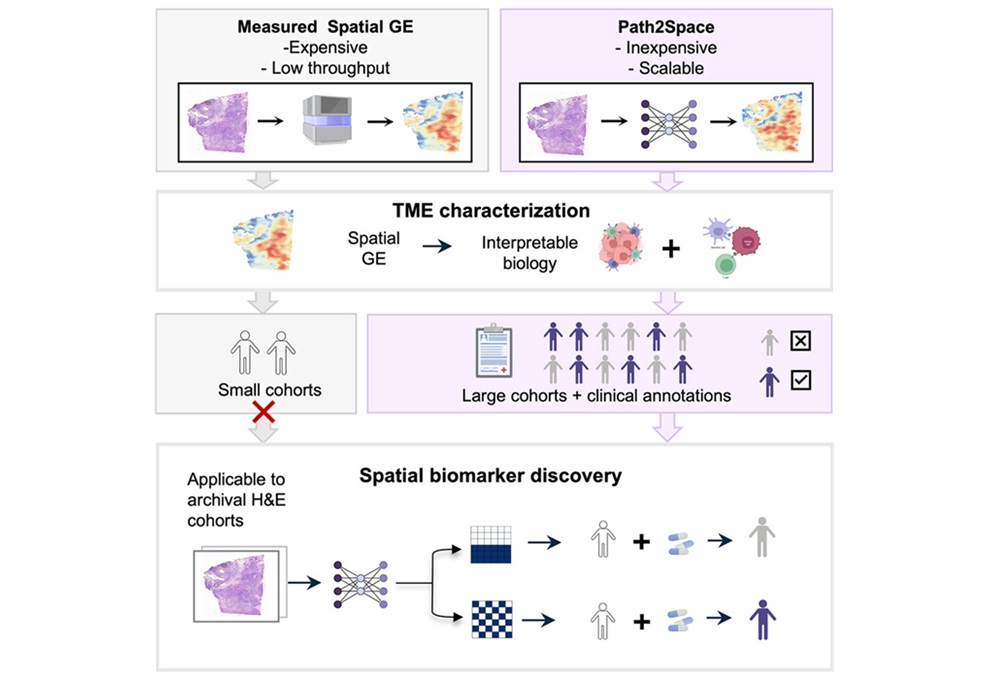
Researchers at Sylvester Comprehensive Cancer Center, part of the University of Miami Miller School of Medicine, utilized GigaTIME, a foundational AI model, to profile immune features directly from routine bone marrow biopsy slides. The approach estimated levels of CD16, a biomarker associated with natural killer cells, from digitized slides to infer aspects of the patient’s immune microenvironment. Investigators then assessed whether these AI-derived signals could indicate which patients benefit most from adding daratumumab, a monoclonal antibody that helps the immune system’s natural killer cells recognize and attack myeloma cells, to standard therapy and who might safely defer autologous stem cell transplant.
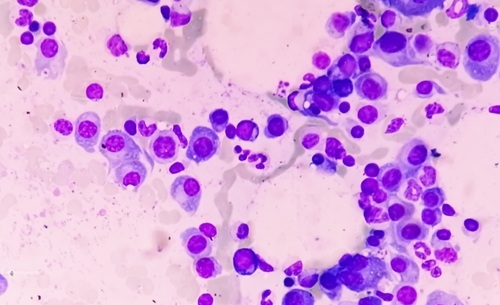
The analysis included 212 newly diagnosed patients in the HealthTree Foundation registry. Outcomes were compared between those receiving bortezomib, lenalidomide and dexamethasone (VRd) and those receiving D-VRd, which adds daratumumab. The primary endpoint was time to next treatment, defined as the interval on initial therapy before switching regimens, and event-free survival was also measured as the time without progression or a new treatment.
Patients with low AI-predicted CD16 who received VRd without transplant had a significantly shorter time to next treatment. In contrast, those in the same low-CD16 group achieved markedly better outcomes with D-VRd; at 18 months, 86.8% remained event-free compared with 28.6% on VRd alone. Among patients with high AI-predicted CD16, 18‑month outcomes were comparable whether they received D‑VRd with or without transplant.
The work will be presented at the 2026 American Society of Clinical Oncology annual meeting (Abstract #7520). It builds on prior efforts to reconstruct molecular features from routine biopsy slides and remains in the research phase. The team plans to compare AI‑predicted CD16 with directly measured immune biomarkers and expand analyses to larger, more diverse cohorts and additional immune markers.
“This study does not suggest that transplant is no longer important in multiple myeloma. Rather, the findings support the emerging concept that transplant decisions may become increasingly personalized and biology-driven,” said C. Ola Landgren, M.D., Ph.D., director of the Sylvester Myeloma Institute, co-Leader of the Translational and Clinical Oncology Program and the Paul J. DiMare Endowed Chair in Immunotherapy.
"I hope this study highlights that AI can move beyond simply automating workflows and instead become a powerful tool for biologic discovery and clinical decision support. This may represent the beginning of a new era of AI-enabled digital pathology in myeloma," said Landgren
Related Links
Sylvester Comprehensive Cancer Center